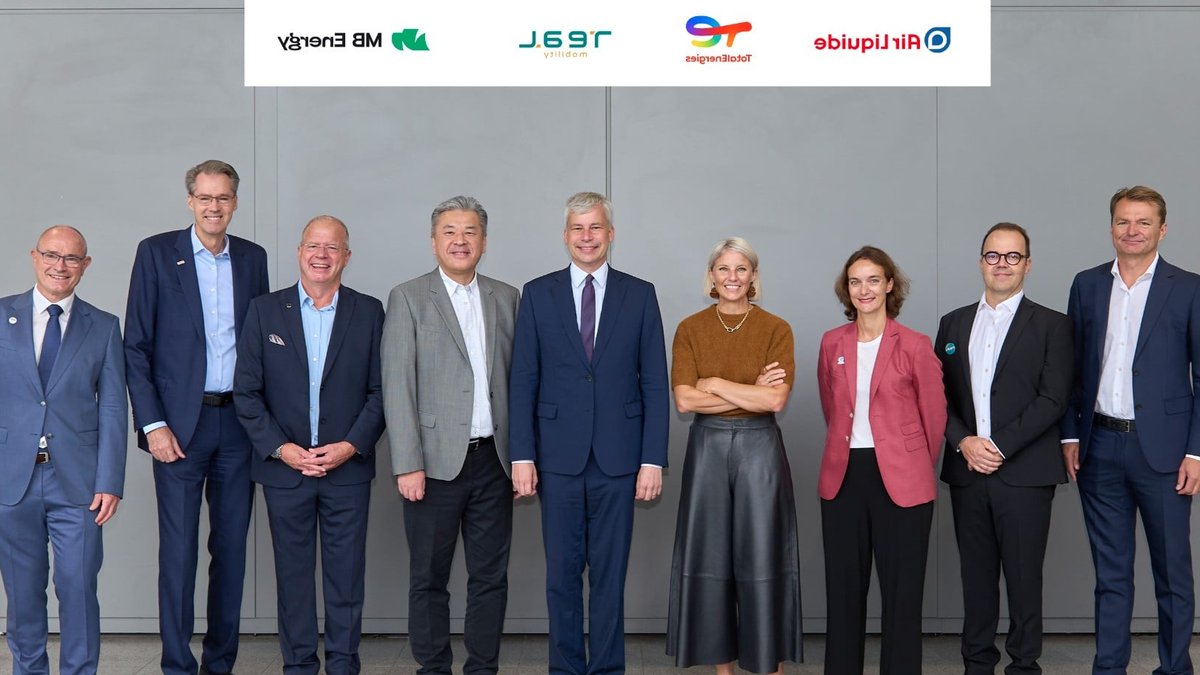
At the IAA Transportation show in Hanover, eight firms unveiled a new hydrogen alliance aimed at scaling hydrogen-powered trucks across Europe by 2030. The participants include Daimler Truck, Volvo Group, Toyota, Bosch, Air Liquide, TotalEnergies, TEAL Mobility and MB Energy. The announcement was made during a high-profile segment of the exhibition, showing the industry’s collective push toward hydrogen-powered trucks.
Political backing and regulatory framework
The coalition seeks to create a German ecosystem that satisfies the prerequisites for large-scale deployment, counting on federal support and the European Union’s Alternative Fuels Infrastructure Regulation, which mandates hydrogen refuelling stations at key transport routes.
Manufacturers’ rollout plans
Daimler Truck plans a limited series of 100 Mercedes-Benz NextGenH2 tractors for customer trials by the end of 2026. The project is financed with €226 million from the federal government and the states of Rhineland-Palatinate and Baden-Württemberg, and it expects to invest a mid-three-digit-million-euro sum in hydrogen vehicles through 2030.
Volvo Group is advancing both fuel-cell and combustion-engine powertrains, earmarking significant capital to bring hydrogen models to market by the end of the decade.
Toyota joins as a technology partner through the Cellcentric joint venture, leveraging more than three decades of fuel-cell development experience to support the alliance’s mobility goals.
Bosch will supply central vehicle components for gaseous hydrogen and advanced refuelling technologies for liquid and gaseous hydrogen.
Infrastructure and supply-chain coordination
On the fueling side, the two truck manufacturers are working with hydrogen producers Air Liquide, TotalEnergies and MB Energy, as well as station operator TEAL Mobility, a 50:50 venture between TotalEnergies and Air Liquide. Together they aim to scale supply chains for both liquid and gaseous hydrogen.
The alliance targets the construction of refuelling stations capable of servicing up to 100 trucks per day. Under the EU regulation, the German government announced a €220 million funding call in January to support such stations and compatible vehicles.
Applications far exceeded the budget, with a requested total of €455 million. Seventy-one proposals were submitted for stations and 455 for vehicles or fleets. Selection will follow a competitive procedure based on predefined criteria, with award notices expected in the second half of the year.
The coalition interprets the strong response to the funding call as evidence of “strong commercial demand from the logistics industry,” according to the alliance’s statement.