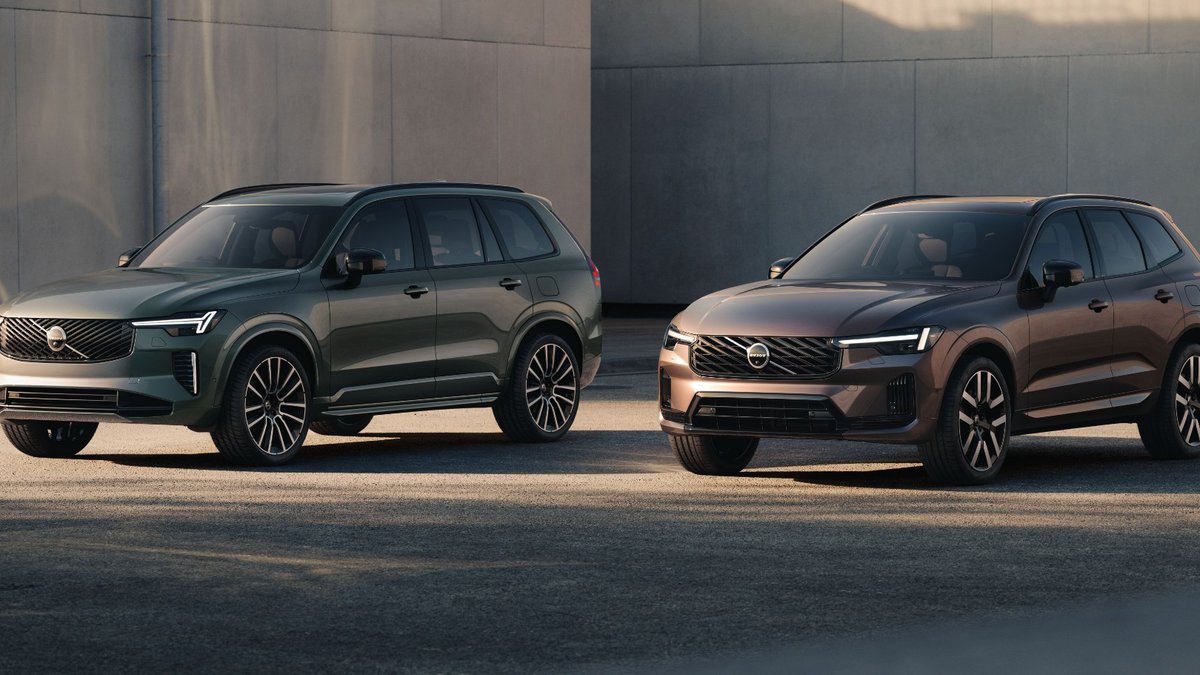
Volvo has introduced its updated XC60 Plug-in Hybrid with a claimed electric-only range of up to 200 kilometers, while the larger XC90 Plug-in Hybrid can travel up to 163 kilometers on a single charge. The new models use a 41.2 kWh battery, more than double the previous 18.8 kWh capacity, which Volvo says allows most daily driving to be completed without using the petrol engine. The electric motor output has also increased to 130 kW from 115 kW.
Extended Electric Range Through Larger Battery
The 41.2 kWh battery is integrated into the vehicle floor and is slightly larger than the 37 kWh unit in the base Volkswagen ID. Polo and significantly bigger than the 27.5 kWh pack in the Renault Twingo Electric. Volvo claims the 200 km range of the XC60 Plug-in Hybrid is class-leading, with only the Lynk & Co 08 coming close with its 39.6 kWh battery and an ADAC-tested real-world range of 176 km.
Both Volvo and Lynk & Co fall under the Chinese Geely Group umbrella, suggesting possible technology sharing despite not being direct sister models. Among German manufacturers, the Volkswagen Golf eHybrid and Audi A3 Sportback TFSI e currently lead with electric ranges between 142 and 143 kilometers.
CEO Highlights Legacy Models in Electrified Lineup
Håkan Samuelsson, President and CEO of Volvo Cars, stated that the XC60 is the company’s best-selling model of all time, while the XC90 marked the beginning of their premium journey. Now, as long-range plug-in hybrids, they build on those legacies and, together with the all-electric EX60, give Volvo its strongest-ever electrified offering in the mid-size SUV segment.
The XC60 Plug-in Hybrid starts at €69,990. Volvo already offers fully electric models, including the EX30 and EX60, positioning the updated plug-in hybrids as a bridge for customers transitioning to full electrification.
CO2 Emissions Debate Intensifies
Plug-in hybrids face ongoing scrutiny over real-world CO2 emissions due to questions about how frequently drivers actually charge their vehicles. In 2022, the European Union found that real-world emissions from 320,000 tested PHEVs averaged 3.5 times higher than type-approval values.
This led to a reduction in the Utility Factor starting in 2025, with a second tightening of standards scheduled for 2027. Germany’s federal government is currently resisting further measures. Despite regulatory tensions, rising fuel prices have reportedly increased PHEV usage at German charging stations, potentially lowering overall emissions for vehicles that rely primarily on internal combustion engines.