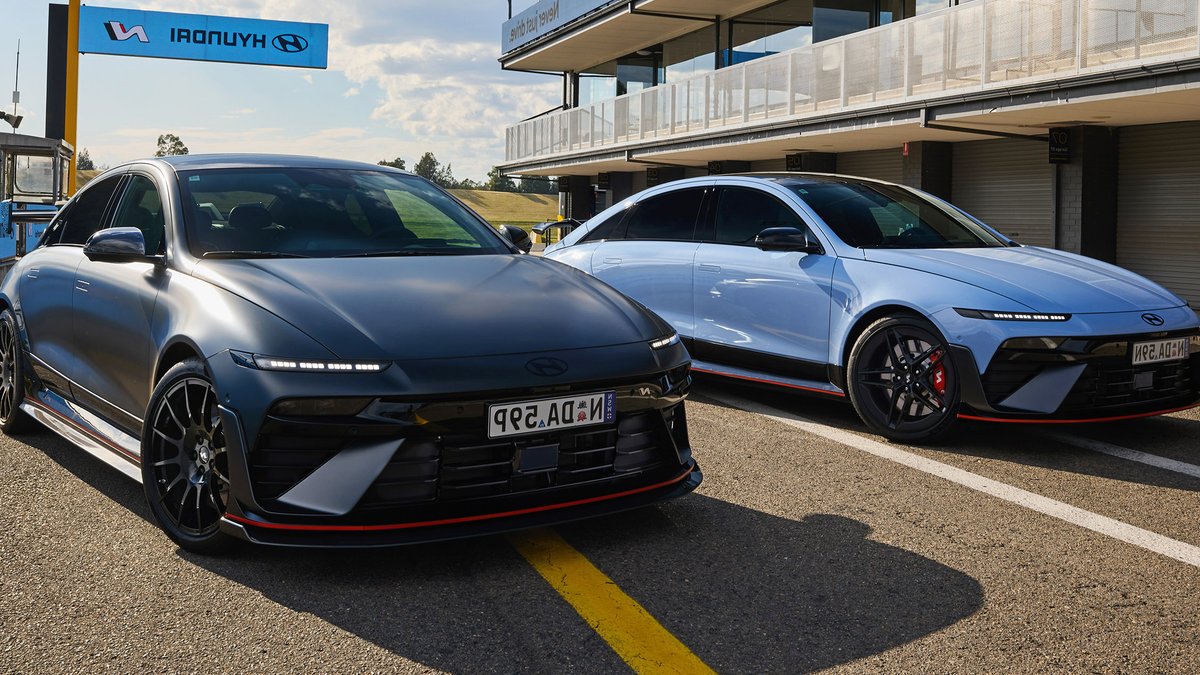
At its 2026 Investor Day, the Korean automaker announced a new mid‑tier offering that slots between its flagship Hyundai N models and the more modest N Line range.
Goal of 100,000 annual sport‑focused sales by 2030
Executives said the division plans to sell roughly 100,000 units each year by the end of the decade, a five‑fold rise from the 20,000 units moved in 2025. The target would push the brand’s share of the performance market from the current 30% to over 60%. Reaching that level would require expanding the lineup from five to more than seven models and offering them in about 40 markets.
Introducing a “high‑volume performance” tier
President and CEO Jose Munoz described the upcoming segment as a “new volume high‑performance variant” that will borrow powertrains and components from existing Hyundai N cars. Australian outlet Drive has informally dubbed the yet‑unnamed tier “N Lite,” reflecting its lighter price point.
Related: Classic Camaro packs massive V8 power
According to the CEO, the new tier will sit squarely between the current N and N Line volumes, which sold 20,000 and 161,000 units respectively last year. By repurposing proven hardware, engineers hope to keep development costs low while adding a more aggressive look to the standard models.
From a broader perspective, this move mirrors what other mainstream manufacturers have done: introduce an entry‑level performance model that shares underpinnings with a flagship, then price it for a wider audience. That strategy often boosts brand visibility and creates a pipeline for future, higher‑priced variants.
Styling cues are expected to be modestly sharper than the N Line but not as extreme as the full Hyundai N lineup. Aerodynamic tweaks and a sport‑tuned suspension could provide a noticeable difference on commuter routes. Power sources may include a mix of hybrid and fully electric setups, depending on the body style.
Future additions mentioned include an entry‑level performance SUV that could replace the discontinued Kona N. Another project involves a new front‑engine platform capable of rear‑wheel‑drive (RWD) or all‑wheel‑drive (AWD) layouts, a configuration that could attract enthusiasts seeking a more traditional sports‑car feel.
Related: Ford borrows Geely platform for rally-styled SUV
The RWD/AWD model is projected to sit above the Ioniq 5 N and Ioniq 6 N in price, suggesting it will not be the cheapest option in the range. Hyundai says the model has the largest market‑covering potential of about 22%.
Beyond the announced vehicles, the company has identified several “whitespace” opportunities: a cheaper entry‑level RWD/AWD model (7% share), a compact electric car (1%), a premium EV (6%), a premium SUV (18%), and a luxury grand tourer (8%). Rumors point to an upcoming Ioniq 3 N that could fulfill the compact EV slot.
Overall, the brand appears poised to assemble one of the most extensive performance portfolios among mainstream carmakers. By leveraging existing technology and focusing on everyday usability, it hopes to capture a larger slice of the enthusiast market while keeping development risk in check.