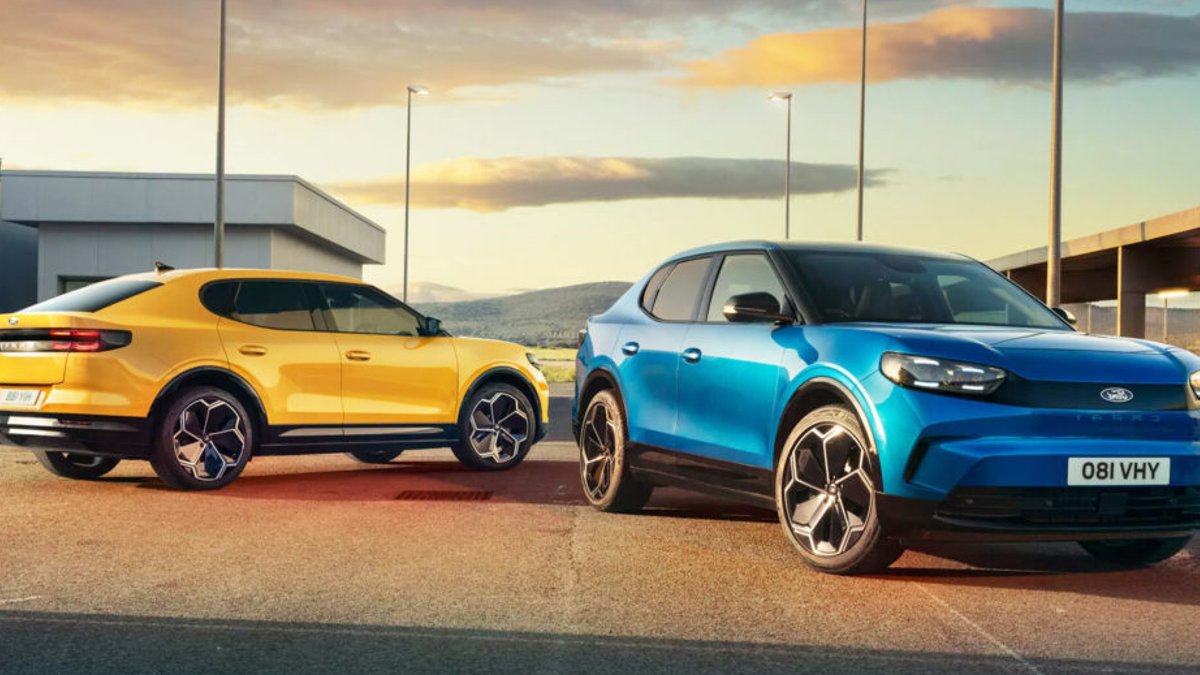
Ford’s upcoming compact SUV in Spain will share its bones with a Geely platform, but the American automaker says the styling will be its own. New details about the partnership, which was finalized in July, show Ford plans to use Geely’s Global Intelligent Electric Architecture (GEA) for a new model described as a “multi-energy” crossover. That means it will likely be offered as both a hybrid and an all-electric vehicle, two configurations the platform already supports.
A Spanish plant gets a second life
The vehicles will be built at Ford’s Valencia factory, a facility that has been running at less than a quarter of its annual capacity for several years. Geely will take over one assembly line at the site, with the all-electric EX2 expected to be the first vehicle produced there. The first units are scheduled to roll off the line in 2028.
Ford’s own model, which it has described as a compact crossover with “rally-bred” styling, is part of the same arrangement. The company has not shared images or detailed specs, and it’s unclear how much of the design will differ from the Geely products underneath. Ford has said only that the styling will keep it from being mistaken for the EX5 or Starray, two vehicles that currently use the GEA platform.
The plant will also build a Bronco-branded SUV from Ford, though that model will use a different platform and is expected in 2028 as well.
Related: VW Amarok Global Uses American Bones, New One Chinese
When the partnership was first announced, Geely said it would build two new energy models at the Valencia site. The company also stated that the joint venture is expected to produce three Ford-branded multi-energy vehicles, but it did not offer further specifics on what those would be or when each would arrive.
Geely Auto Group chairman An Conghui confirmed on an earnings call last week that Ford will use the GEA platform for its own new model. That platform currently underpins several Geely products, including the all-electric EX5 and the plug-in hybrid Starray.
The deal gives Geely a manufacturing foothold in Europe without the cost of building a new factory from scratch. For Ford, it provides access to an existing electric vehicle architecture at a time when the company has been scaling back its own EV investments. The arrangement is unusual in the auto industry, where competitors rarely share core platforms, but cross-manufacturer deals have become more common as companies look to spread development costs.
Geely Auto Group vice president Alex Nan called the cooperation “an important step towards open collaboration” and said it “represents a milestone in Geely Auto’s global development.”
Related: US may ease Canadian auto tariffs
Neither company has said which of the three Ford-branded vehicles will come first, or whether all of them will share the same platform. Ford’s “multi-energy” language suggests the company is keeping its options open on powertrain mix, which makes sense given how uneven EV demand has been across European markets. The first vehicles are still roughly three years away, and consumer preferences could shift again before then.
What remains unclear is how much of the engineering work Ford will do itself. Using another automaker’s platform typically means accepting its structural limits, including battery placement, wheelbase options, and suspension geometry. Ford’s “rally-bred” styling hints at a more aggressive visual treatment, but that alone won’t change how the vehicle drives. The company has not said whether it will recalibrate the suspension or steering for its version, or simply rebadge a Geely underneath.
The Valencia plant has been operating well below capacity for years, and the partnership gives both companies a reason to keep the line running. Geely gets access to a factory in a major European market, and Ford gets a new product without the full cost of developing a dedicated platform. Whether that trade-off produces a vehicle buyers actually want is another question entirely.