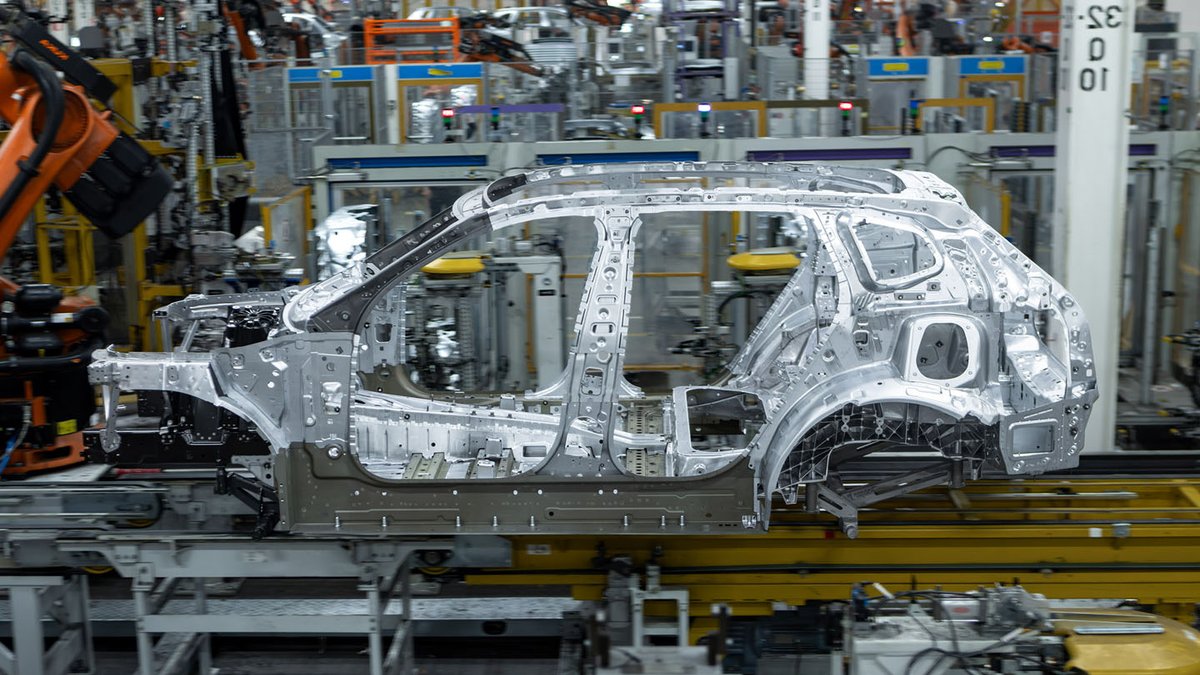
BMW says it has lowered the carbon footprint of its new X5 by about 40 percent before the vehicle even rolls off the production line.
Life‑cycle approach drives the reduction
The company’s effort focuses on the entire life‑cycle of the SUV, from raw‑material sourcing to end‑of‑life recycling. A recent life‑cycle analysis, validated by the German Technical Inspection Association, underpins the claim, although the exact CO₂e figure will be released with the official launch.
One of the biggest changes is the shift to electric arc furnace (EAF) steel for roughly half of the body structure. EAF steel incorporates a high share of recycled scrap and is produced with renewable electricity, cutting emissions compared with conventional blast‑furnace steel. Secondary materials also appear throughout the interior and chassis, reducing the need for virgin inputs.
Aluminium components such as wheel rims, wheel supports, rear‑axle brackets and brake calipers are now made using renewable energy for both the electrolysis step and the casting process. In the doors, about 35 percent of the aluminium comes from recycled sources or waste recovered from the press shop, a practice known as “closed‑loop” recycling.
Related: Hennessey unveils 850bhp manual supercar without screens
Materials and battery improvements
The headliner yarn is produced entirely from recycled PET, a material commonly sourced from discarded beverage bottles. Altogether, roughly one‑third of the iX5 60 xDrive’s mass—about 940 kg—is derived from secondary raw materials.
Battery manufacturing has also seen a shift toward secondary inputs. The Gen6 battery packs used in the X5 contain a higher proportion of recycled cobalt, lithium and nickel. Renewable power fuels the production of both anode and cathode materials, and the overall CO₂e emissions per watt‑hour have dropped by roughly 28 percent compared with the earlier Gen5 battery.
BMW estimates that, depending on drivetrain choice, annual mileage and the electricity mix for charging, the iX5 60 xDrive will begin to out‑perform a comparable gasoline‑engine model in total CO₂e after one to two years of use.
Similar life‑cycle initiatives have been pursued by other premium automakers, yet few have quantified the impact as thoroughly as BMW does here. The emphasis on recycled steel and aluminium mirrors broader industry trends, but the integration of renewable energy at each production stage sets this effort apart.
Related: Vauxhall Grandland Misbehaves Feels Like Faulty VXR
While the numbers sound promising, the real‑world benefit will hinge on the actual mix of electricity used by owners. If the vehicle is charged with grid power that remains carbon‑intensive, the projected advantage could shrink. Conversely, in regions where renewable sources dominate the grid, the emissions saved during the use phase may exceed expectations.
BMW’s approach reflects a growing consensus that reducing a car’s environmental impact requires more than just improving fuel efficiency.
It is a step forward.