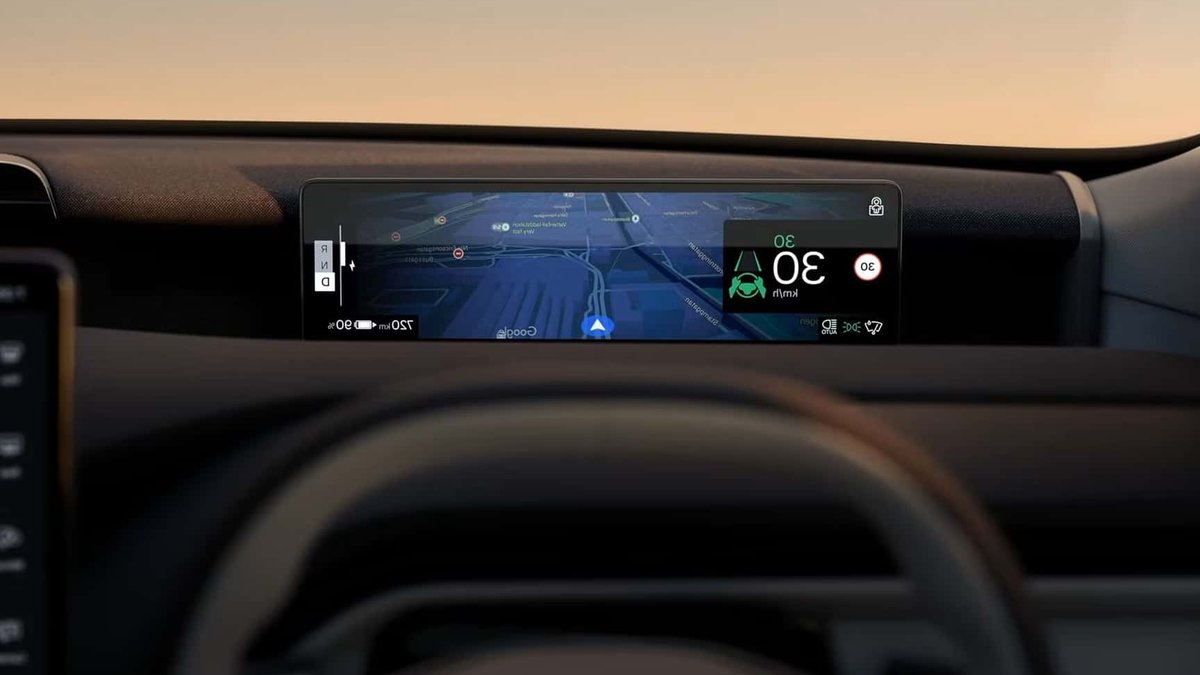
The Swedish automaker Volvo is collaborating with Nvidia to develop advanced automated driving capabilities for its upcoming vehicles, targeting hands-free, point-to-point driving by 2030. To achieve this, it will integrate Nvidia’s Hyperion platform, featuring custom high-powered chips and a full sensor suite positioned throughout the vehicle.
What Volvo’s New System Promises
The system is designed to offer Level 2++ functionality, enabling the car to handle complex urban environments without explicit driver intervention. This includes handling stop signs, traffic lights, and unprotected left turns. Volvo claims it will eventually allow for “eyes-off, mind-off” driving, though a timeline for this feature remains undisclosed.
The technology uses cameras and sensors to detect road markings and other vehicles, but unlike some competitors, it doesn’t rely on pre-mapped areas to make decisions. Volvo will also adopt Nvidia’s Alpamayo software stack, which employs “reasoning” models to interpret road conditions and decide when to brake, accelerate, or steer.
How It Compares to Competitors
Volvo’s new system is expected to function similarly to Tesla’s Full Self-Driving (Supervised) and Rivian’s Universal Hands-Free features. However, Volvo’s approach emphasizes reasoning-based driving, which Nvidia claims improves safety by allowing the vehicle to handle rare, untrained scenarios while making each decision transparent and auditable.
For drivers, this could mean a significant shift in how they interact with their vehicles. While Volvo’s current Pilot Assist system requires clear road markings and offers limited features like adaptive cruise control and lane change assistance, the new system promises true hands-free driving in a wider range of conditions.
The Risks and Rewards for Volvo
The initial setup does not include lidar, but the platform can accommodate it if Volvo decides to add it later. As the automaker moves forward, the success of this partnership will depend on how well the system performs in real-world conditions and how quickly it can gain consumer trust.
Nvidia’s Role and System Capabilities
Nvidia’s technology plays a central role in Volvo’s new system, using its Hyperion platform and Alpamayo software. The software employs reasoning models to interpret road conditions, making decisions on braking, acceleration, and steering.