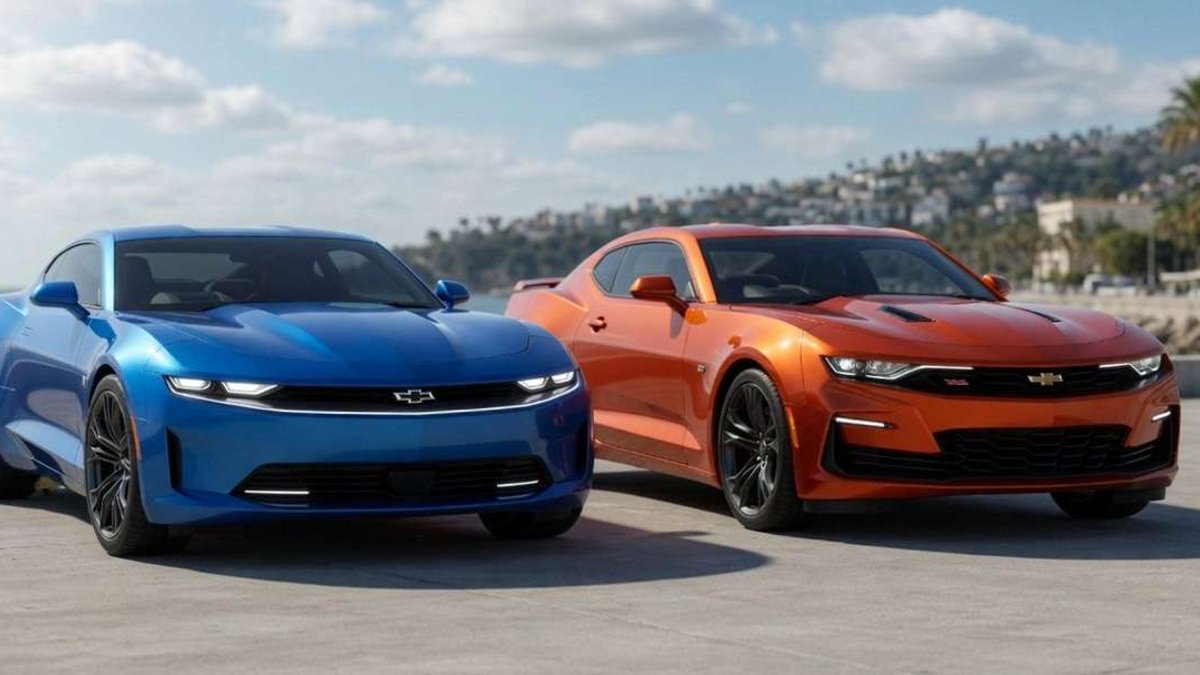
The next generation of the Camaro is a highly debated topic among car enthusiasts, with many focusing on the powertrain and engine options. However, according to Tim Healey, an automotive reporter at Torque News, the real reason the next Camaro could flop has nothing to do with what’s under the hood.
Tim Healey‘s answer was straightforward: “It’s not about the powertrain — what caused slow sales was poor visibility and styling that looked good at first but aged poorly, and an interior that also aged poorly. Get the design right and the car will sell.”
The current debate among car enthusiasts is centered around the Camaro‘s design, particularly the possibility of a four-door version. Some argue that a four-door Camaro would be a betrayal of the nameplate’s heritage, while others see it as a necessary step to increase sales.
However, Healey‘s comment suggests that the door count is not the main issue. Instead, it’s the overall design and interior of the car that will determine its success. A four-door Camaro could still be a failure if it doesn’t look good or feel special inside.
The Camaro‘s sixth-generation model had a stunning face, but its gun-slit windows made it nearly impossible to see out of, and its dashboard felt like a rental car by the third year. Healey argues that these design flaws, rather than the powertrain, were the main reason for the car’s slow sales.
The powertrain debate has swung in favor of traditional combustion engines. This has led to speculation about the Camaro‘s powertrain options.
However, the overall design and interior of the car that will determine its success. A Camaro with poor design and interior could still flop.
Related: Spain’s new‑car market stalls amid EV incentive doubts
The Mustang and Charger have also made significant changes to their strategies. The Charger is going all-in on a multi-energy strategy.
Pricing is also a key factor in the Camaro‘s success. A car that looks special can justify a premium, while a car that looks like a rental cannot.
The sixth-generation Camaro‘s slow sales were not due to a lack of horsepower, but rather its poor design and interior.
GM can build a Camaro, but if the cabin and glass area don’t get fixed, the car could still repeat the same mistakes as the outgoing generation.
The door count, powertrain, and pricing are all still up in the air. If Healey is right, GM’s design and interior teams need to learn from the last generation’s mistakes to ensure the Camaro‘s success.
Ultimately, the decision that makes or breaks the Camaro program is not about the engine or the door count, but about getting the design right. If GM can nail the engineering and fix the styling and ergonomics mistakes of the outgoing generation, the Camaro could still be a success, particularly if they focus on creating a car with a long range and good design.