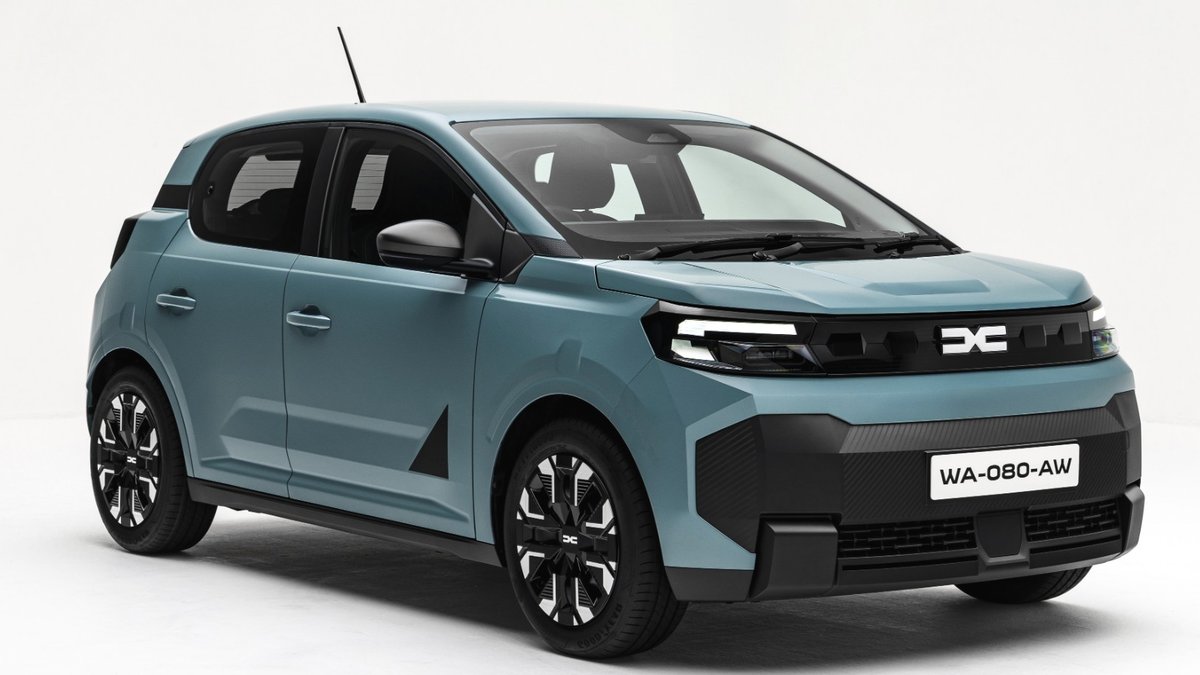
Dacia has unveiled its second-generation Spring, shifting production from China to Slovenia. The A-class electric car will be manufactured alongside the Twingo E-Tech, sharing its technical platform. Pricing starts at €17,900, with the entire range under €20,000. This strategic move positions the Spring as one of the most affordable electric vehicles in Europe, catering to budget-conscious buyers seeking entry-level electric mobility.
The Spring maintains Dacia’s focus on affordability, offering a stripped-down model for budget-conscious buyers. It’s positioned as a second car or an entry point to electric mobility, with subdued colors and minimal extras. This approach aligns with Dacia’s philosophy of providing essential functionality without unnecessary frills, making it an attractive option for those prioritizing cost over luxury.
From China to Europe: A Strategic Shift
The most significant change is the relocation of production from Wuhan, China, to Renault’s Novo Mesto plant in Slovenia. This move reflects a broader strategy to streamline manufacturing and reduce costs, leveraging the Renault Group’s new RG-EV platform. By bringing production closer to its primary European market, Dacia aims to reduce logistics costs and improve supply chain efficiency, ensuring quicker delivery times and better responsiveness to market demands.
Despite the shift, the Spring retains its no-frills approach. It offers just four paint options—Agave, Slate Grey, Diamond Black, and Glacier White—and two trim levels, Expression and Journey, both sharing the same 60 kW motor and 27.5 kWh LFP battery. This setup delivers a WLTP range of up to 250 km—a modest improvement over its predecessor. The limited customization options show Dacia’s commitment to simplicity and cost-effectiveness, ensuring the Spring remains accessible to a wide audience.
For those relying on this vehicle as their primary transport, the limited range and charging options may require careful planning, especially for longer trips. The Spring’s efficiency, rated at 12.7 kWh/100 km, helps but doesn’t eliminate the need for frequent stops on extended journeys. However, its urban-focused design makes it ideal for daily commutes and short-distance travel, where its efficiency and compact size shine.
Performance and Practicality
The Spring’s 0-100 km/h time has improved to 12.5 seconds, though it remains a city car at heart. Its dimensions have increased, now measuring 3.85 meters in length and 1.74 meters in width, offering more interior space and a larger boot capacity of up to 337 liters. These enhancements make the Spring more versatile, accommodating both passengers and cargo with greater ease.
The vehicle’s weight is kept low at just over 1.2 tonnes, thanks to simplified features. The base model lacks a central display, rear-view camera, and DC charging, though these can be added as options. The Expression trim includes essentials like electric front windows and manual air conditioning, while the Journey trim adds a 10.1-inch central display and navigation. This modular approach allows buyers to tailor the Spring to their needs without overspending on unnecessary features.
A Commuter Car with Chinese Roots
The Spring benefits from Renault’s collaboration with Chinese partners, particularly the ACDC research center in Shanghai, which contributed to its powertrain development. This partnership has helped reduce development time and costs, even though Renault and Dacia are not active in China. By leveraging Chinese expertise in EV technology, Dacia has been able to accelerate its electric vehicle ambitions while maintaining its cost-effective approach.
The Spring’s design remains functional, with vertical front and rear ends and black plastic cladding. Inside, the dashboard features a 7-inch digital instrument cluster, with the higher trim offering a 10.1-inch touchscreen. Notably, features like sliding rear seats are absent, further emphasizing its no-nonsense approach. This focus on practicality ensures the Spring meets the needs of urban commuters without unnecessary complexity.
Dacia plans to launch the new Spring on September 15, with deliveries starting before year-end. The model has already sold around 210,000 units in Europe since 2021, demonstrating its popularity as an affordable electric vehicle. By 2030, Dacia aims to introduce three more fully electric vehicles, likely leveraging its ongoing cooperation with China. This expansion shows Dacia’s commitment to electric mobility and its strategy to remain a key player in the affordable EV segment.