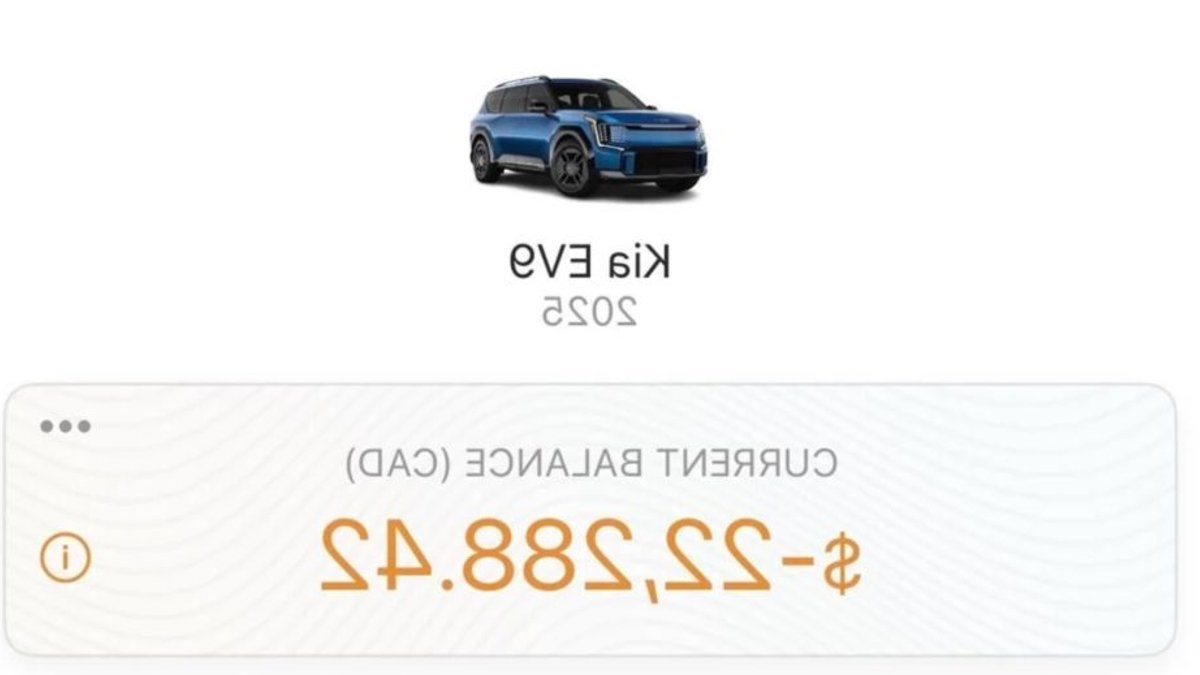
A Canadian Kia EV9 owner received a $22,308 bill after a routine charging session. The invoice indicated only 4.91 kilowatt-hours (kWh) were added—enough for about 20 miles—but the system logged the session as lasting over 15 months.
How a small charge became a massive bill
The session started at 6:57 p.m. on May 17, 2025, as shown in the invoice posted by Reddit user IntelliDev. It ended at 1:09 p.m. on August 25, 2026—nearly a year and three months later. At that rate, the EV9 would have drawn power at less than half a watt per hour, far below even the slowest home chargers.
Kia’s EV9 supports fast charging, reaching up to 235 kW with compatible equipment. If the bill were correct, the car would have charged slower than a trickle. A Reddit comment noted the absurdity, comparing it to Chevrolet’s Bolt, which maxes out at 55 kW.
The invoice suggests the issue stemmed from a communication failure. It states the session occurred on a terminal that lost connection. The billing system never received the signal to end the session, keeping the meter running and charging by time instead of energy used.
The math aligns with the error. At roughly $2 per hour, the 15-month span would total close to $22,308. Yet the invoice lists the session duration as just seven days, 18 hours, 12 minutes, and 40 seconds, contradicting the billing calculation.
Related: Hyundai N gets cheaper entry and RWD option
Such glitches highlight vulnerabilities in public charging networks. Most EV owners charge at home, where costs are minimal. Public stations, particularly fast-charging hubs, charge more, but even the highest rates don’t approach $4,500 per kWh. Drivers who depend on these networks need reliable systems that prevent runaway charges.
The owner awaits a response
IntelliDev contacted Hypercharge Networks, the company operating the charger, to dispute the bill but hasn’t heard back. Hypercharge has not publicly explained the error or confirmed whether other customers faced similar problems.
The case shows gaps in how charging networks manage dropped connections. If a session fails to close, should automatic safeguards cap billing after a set time? Most networks enforce time limits, but this incident suggests those protections may not always function correctly.
For now, the owner remains in limbo. The bill is unpaid, and without a response from Hypercharge, it’s unclear if the charge will be reversed. Other EV drivers may want to review their receipts to avoid surprises.
This situation also reflects broader shifts in company fleet adoption, where charging reliability becomes critical as more businesses integrate electric vehicles.