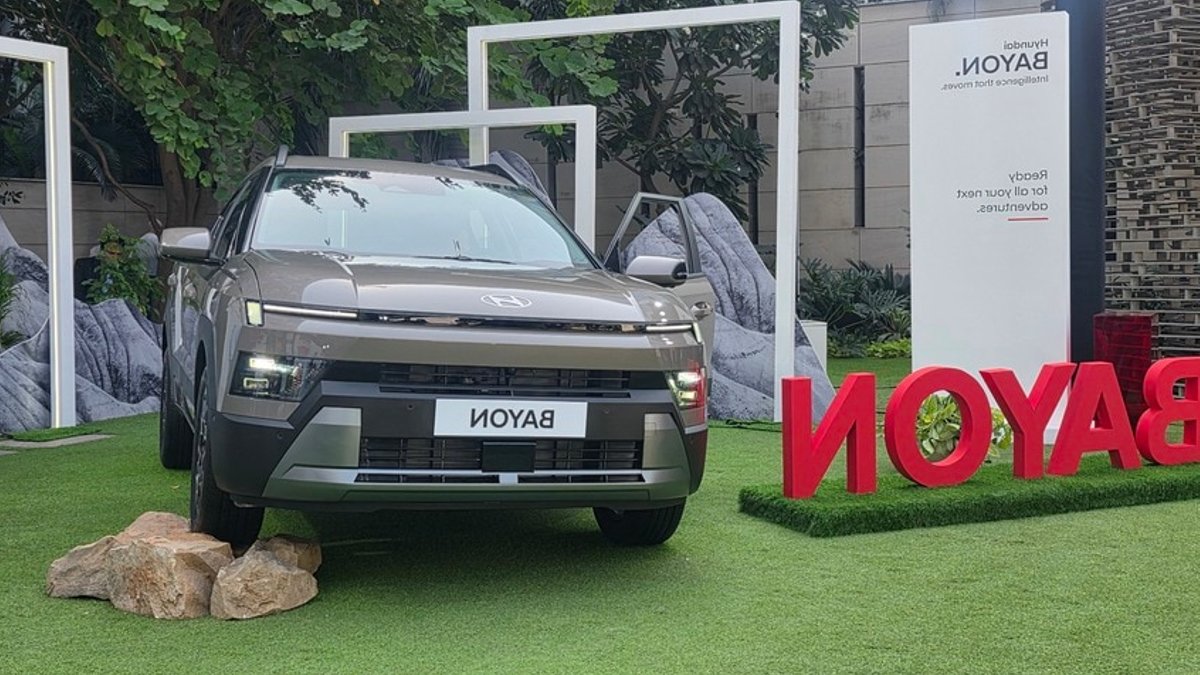
Hyundai India has confirmed that a factory-fitted CNG version of the Bayon will go on sale in January 2027, just weeks after the petrol-powered midsize SUV made its debut this month.
The CNG model is expected to carry over the 1.5-litre, four-cylinder naturally aspirated engine from the petrol Bayon, which makes 115PS and 144Nm. As is typical with bi-fuel conversions, the CNG version should deliver slightly lower output than those figures.
A 6-speed manual gearbox is the likely transmission choice. Whether Hyundai will also offer a CVT automatic with CNG is not yet known.
Once launched, the Bayon will become the largest Hyundai model in the country to be sold with a CNG option. The company has so far limited the technology to smaller vehicles, so this marks a step up in size for its CNG line-up.
Read Also: India’s BS7 Targets Brake, Tyre Emissions in New Rules
One practical concern with CNG cars is the loss of luggage room. Hyundai may address this by placing the gas cylinder under the floor, an approach already used on the CNG variants of the Maruti Victoris. If the Bayon follows this layout, it should offer the same boot capacity as the petrol model.
Hyundai has not said which trims will get CNG. There are two broad possibilities. The company could follow the Maruti and Toyota playbook, restricting CNG to a handful of lower-spec variants. Alternatively, it could position CNG as a proper alternative to petrol across most of the range, or even all of it. The decision will shape how appealing the Bayon CNG is to buyers who want both low running costs and a well-equipped cabin.
Prices have not been revealed, not even for the petrol Bayon at this stage. However, the CNG variants should cost a little more than their petrol equivalents, as is the norm in this segment. When it arrives, the Bayon CNG will face established names in the CNG midsize SUV space. Its direct rivals will be the Maruti Victoris and Maruti Grand Vitara, along with the Toyota Hyryder.