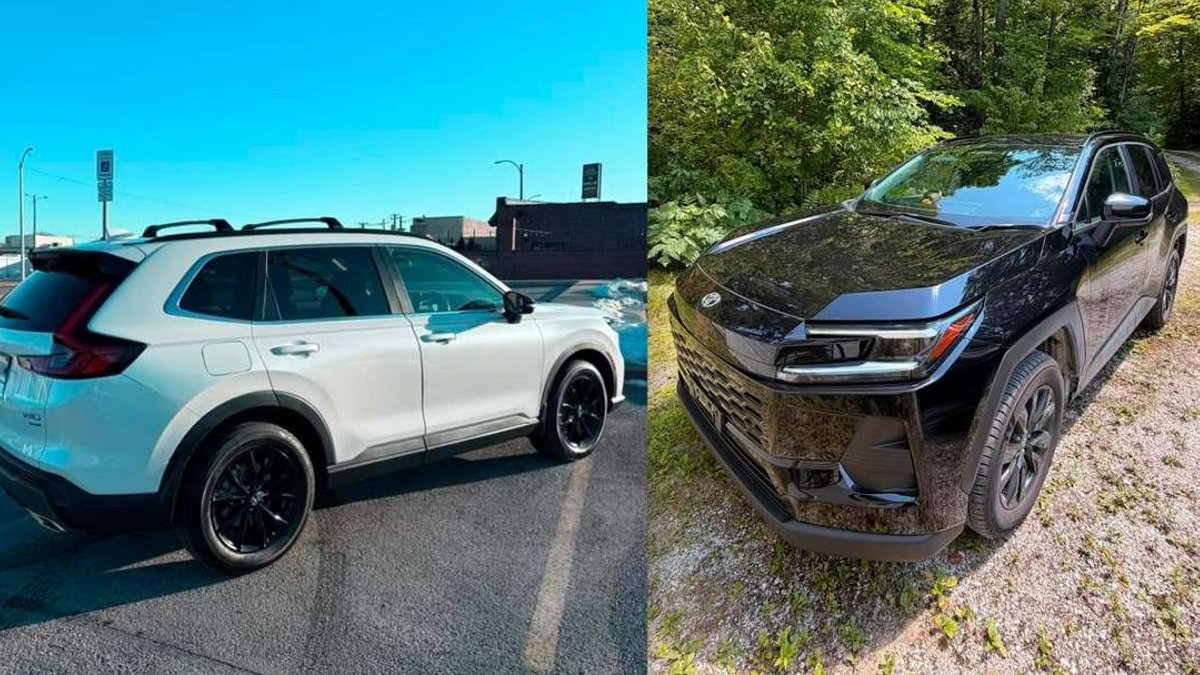
A 2025 Honda CR-V owner, Yvan Carr-Chua, recently test-drove a 2026 Toyota RAV4, logging 450 miles and achieving an impressive 44.5 MPG. His personal vehicle, a 2025 Honda CR-V Sport Hybrid, averages 33.8 MPG over 22,000 miles of daily driving, making the RAV4’s fuel efficiency a significant improvement.
Despite the RAV4’s impressive fuel economy, Carr-Chua is unwilling to switch from his Honda, citing a major flaw in the Toyota’s interior design. The RAV4’s cabin ergonomics and materials are not as refined as those in the Honda CR-V, according to Carr-Chua.
Carr-Chua shared his thoughts on the Honda CR-V 2023-2026 Facebook Discussion Club, stating that the RAV4’s interior is “meh” and lacks luxury, with dated lines and lackluster materials. In contrast, the Honda CR-V’s cabin is more refined, with better materials and a more user-friendly design.
Related: Tesla Cybertruck Owner Claims 500-Mile Range Costs $16
A report notes that the Honda CR-V’s interior has a “finish that reflects Honda’s consistent investment in the tactile quality of its most accessible models.”
The root cause of the difference in interior design lies in the structural assembly and material science of modern vehicle dashboards. Toyota engineers the RAV4’s interior with hard, high-durability polypropylene plastics to lower manufacturing overhead and provide a “childproof” cabin.
However, these rigid plastic panels lack the acoustic damping layers and micro-foam backings that Honda integrates into the CR-V’s honeycomb dash architecture and isolated structural subframes. This results in a less refined and more “clunky” driving experience in the RAV4.
Related: Global PHEV sales keep declining worldwide
Honda achieves its acoustic advantage by utilizing a specialized, lightweight aluminum front subframe that is completely rubber-isolated from the primary unibody chassis. This design provides a more premium and refined driving experience.
Carr-Chua’s test drive highlights that vehicle purchasing decisions are no longer decided by a single impressive stat line on a window sticker. Toyota built an incredible fuel-sipping powertrain, but Honda built a cohesive, comfortable daily sanctuary that owners enjoy sitting in every morning.
As the hybrid market continues to evolve, it’s likely that we’ll see a shift towards more refined and comfortable interiors, as well as improved fuel efficiency. For now, the choice between the Honda CR-V and Toyota RAV4 depends on your individual priorities and needs.