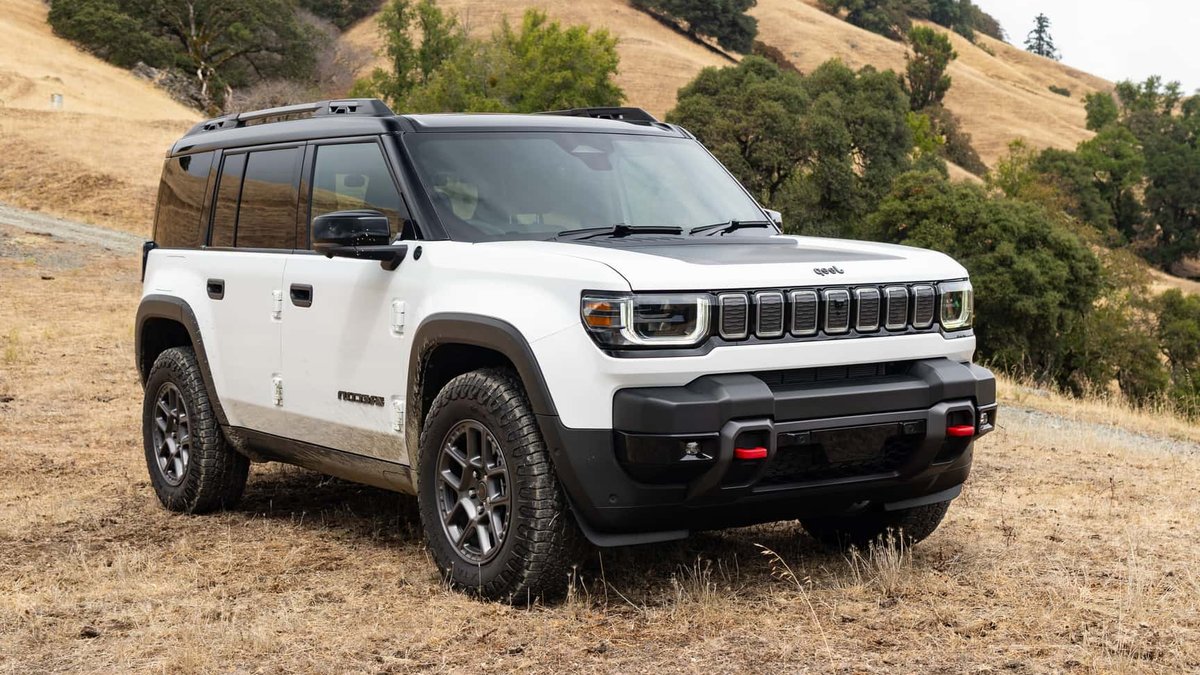
The Jeep Recon EV achieved only 160 miles in a highway range test at a steady 75 mph, missing its 222-mile EPA combined estimate by 62 miles. Car and Driver conducted the evaluation, demonstrating how the truck’s rugged engineering, a bulky frame, poorly streamlined bumpers, and oversized tires, accelerates battery drain compared to most electric vehicles. The results reveal a clear efficiency penalty for prioritizing off-road dominance over highway endurance.
The Recon’s 94-kilowatt-hour usable battery (totaling 100.5 kWh) delivers just 1.7 miles per kWh on highways, a figure worse than even the GMC Hummer EV (1.4 miles/kWh) and the Mercedes-Benz G 580 Electric. At slower speeds, efficiency improves modestly, with the dashboard indicating 2.5 miles per kWh during urban-style driving. These figures suggest the Recon’s energy consumption remains raised regardless of terrain.
Owners will face more frequent charging stops than with conventional electric trucks. Adhering to the 10-to-80% charge guideline, the Recon’s real-world highway range shrinks to 112 miles. While Jeep advertises a 23-minute charging window for that range, the vehicle’s high energy demands will likely increase electricity costs relative to more efficient competitors. The gap between laboratory estimates and actual use shows a recurring issue in the electric truck segment.
The Recon’s off-road focus explains its poor highway efficiency, but the trade-off may frustrate buyers seeking long-distance capability. The 62-mile shortfall between EPA projections and tested performance highlights how electric trucks struggle to reconcile ruggedness with sustained efficiency. For drivers who limit use to trails or short highway segments, the battery capacity may prove adequate, but cross-country travelers will need to plan charging logistics more carefully than with other electric models.
Jeep markets the Recon as a high-performance off-roader, not a highway cruiser. Its design prioritizes traction and articulation over aerodynamic refinement, a choice that benefits capability at the expense of range. While the truck’s 100.5 kWh battery ranks among the largest in its class, the power-hungry architecture ensures that real-world efficiency remains a limitation for extended trips. Potential buyers should weigh whether off-road priority justifies the added charging frequency compared to more range-focused electric trucks.