The 4.0-liter flat-six in the 992 GT3 RS and the 12-cylinder beast in the 917 are undeniable icons. Yet for many, the best engine Porsche ever built has just six cylinders—and a name tied to decades of history.
The engine that outlasted its creator
Hans Mezger, who died in 2020, led the team behind the original air-cooled 2.0-liter “901” engine in the first 911. That design became the foundation for every air-cooled flat-six Porsche produced over the next 30 years, along with the powerplants in many of its race cars. These engines earned a reputation for durability, thanks to features like a split crankcase and a dry-sump oil system.
Mezger retired in 1993. Four years later, Porsche introduced the 996, its first water-cooled 911. The new M96 engine marked a departure—and proved problematic. Early models suffered from cracked cylinder heads, bore scoring, and catastrophic intermediate shaft bearing failures, known among enthusiasts as IMS issues.
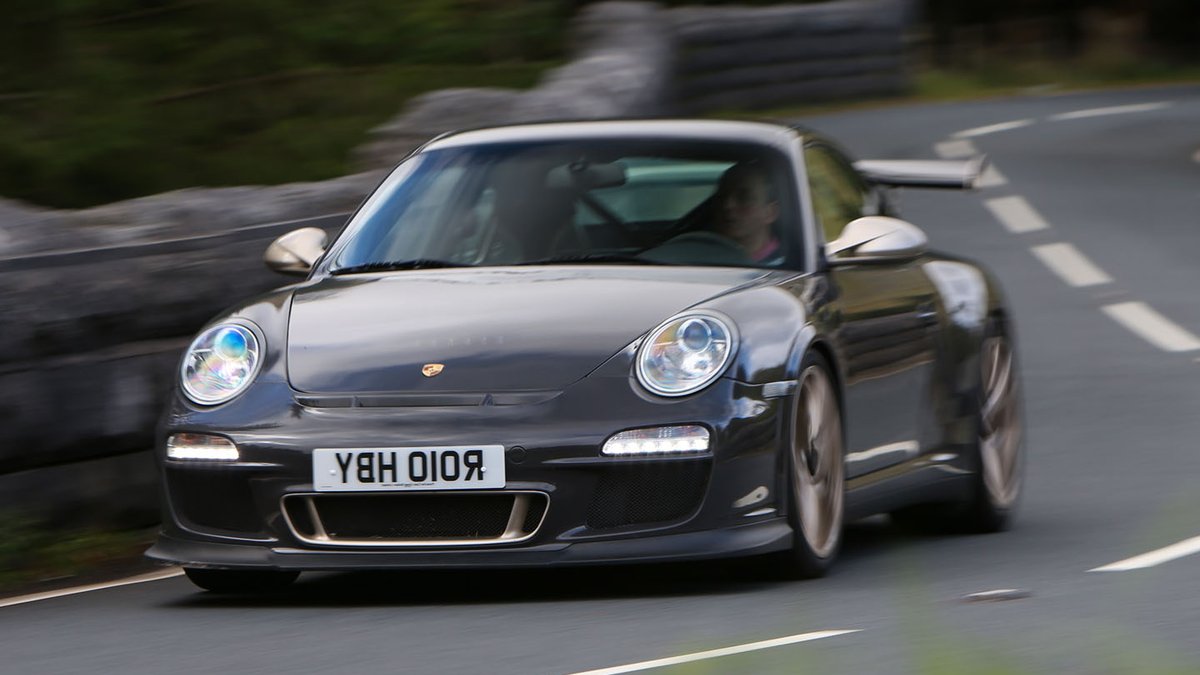
When Porsche needed a dependable engine for the 996 GT3 in 1999, it revisited its past. The company adapted the block from the Le Mans-winning 911 GT1, which had roots in Mezger’s 962 Group C racer. The result was a 3.6-liter, naturally aspirated flat-six with a split crankcase, dry-sump system, and a gear-driven IMS—eliminating the M96’s chain-driven flaws.
Enthusiasts soon called it the “Mezger,” honoring its lineage and setting it apart from the unreliable M96. The name endured, even though the engine was officially designated M96/7x for the 996 and later M97/7x for the 997.
A race-bred engine for the road
The Mezger wasn’t just dependable—it was exhilarating. In naturally aspirated form, whether 3.6-liter, 3.8-liter, or the 4.0-liter version producing nearly 500 horsepower, it became one of the most celebrated engines in production cars. The tachometer needle jumps at idle, cam chains rattle, and the exhaust note is a raw mechanical growl. Yet it revs effortlessly past 8,000 rpm without hesitation.
Its racing heritage was unmistakable. The same engine powered race and rally versions of the 996 and 997 GT3s without problems. Some owners have driven hundreds of thousands of miles on the original block with only routine maintenance. Such longevity is uncommon in high-performance engines, particularly those that sound this aggressive.
Many extraordinary engines exist—Bugatti’s W16, Cosworth’s V12, Lamborghini’s V10. But few blend history, reliability, and personality like this flat-six. It doesn’t just deliver power; it feels alive, even at a standstill.
The classic Cooper design revival shares a similar philosophy, prioritizing driving engagement over sheer output.
For those who’ve experienced it, the Mezger isn’t just a great engine. It represents engineering that makes drivers overlook every other flaw in Porsche’s history.