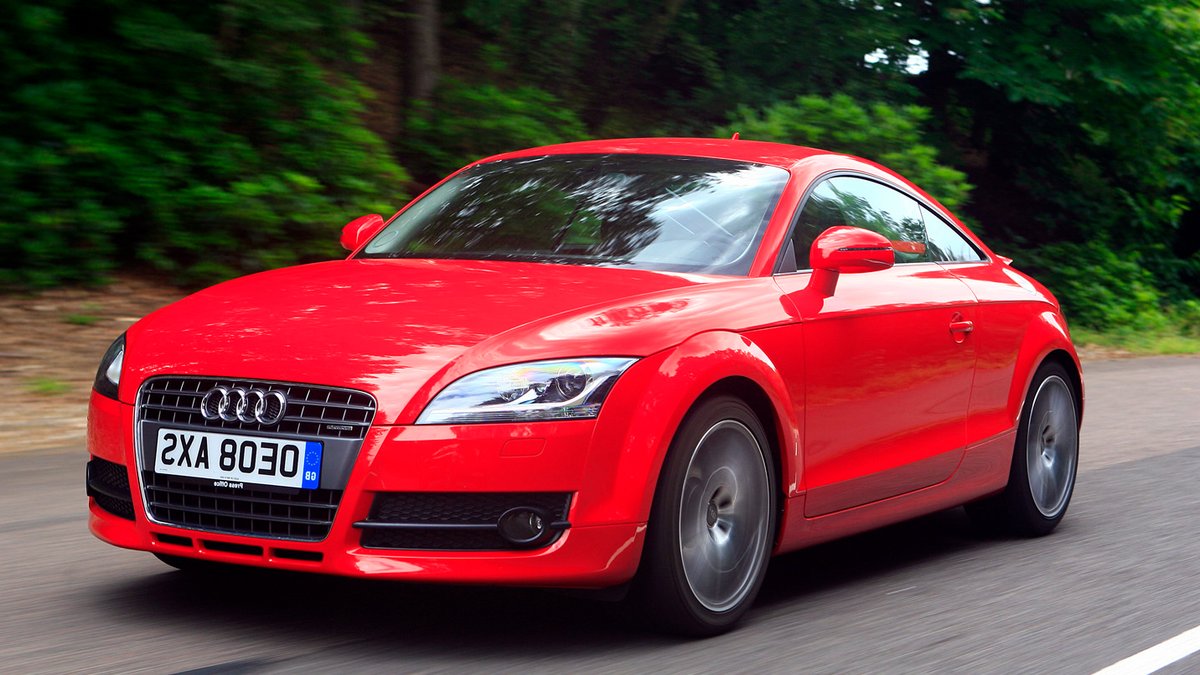
The Audi TT has long served as a practical sports car. It delivers striking looks and driving enjoyment without sacrificing daily usability. Prices for the second-generation model, produced from 2006 to 2014, have fallen as low as £2,000, offering one of the cheapest ways to own a head-turning vehicle.
The design remains convincing.
The TT’s angular lines and bold wheel arches give it a contemporary appearance. Unlike some sports cars that become dated, this generation maintains a clean, Bauhaus-inspired look. The interior saw the biggest improvement over its predecessor. Controls and dials feel modern, while the low seating position mimics a true sports car, though the Volkswagen Golf-based platform prevents it from feeling extreme.
The coupé provides a 290-litre boot, expandable to 700 litres with folded rear seats. The Roadster removes the back seats but still offers 250 litres of luggage space—enough for a weekend away. Rear seats are cramped, suitable only for small children or short trips.
Related: Fiat Multipla Makes Surprise Comeback
Driving experience
On the road, the TT combines the Golf GTI’s reliability with a more engaging feel. Steering is light but not overly sharp, and the car tends to understeer in corners, making it predictable rather than exciting. Still, it outperforms most hot hatches, especially with Quattro all-wheel drive.
The ride is firm yet comfortable, balancing sportiness and refinement. Models with Magnetic Ride adaptive dampers let drivers switch between a stiff Sports mode and a softer Comfort setting. The supportive seats remain comfortable on long drives, and the cabin stays quiet at highway speeds.
Engine options vary. The 2.0-litre turbo petrol (EA113), shared with the Mk5 Golf GTI, is the most dependable choice—197 horsepower, 40 mpg on the highway, and reasonable running costs. The 3.2-litre VR6 delivers more torque and a distinctive exhaust note but carries higher tax (£735 annually) and worse fuel economy (25-30 mpg). The 2.0-litre diesel is the most efficient (50+ mpg) and cheapest to tax but fails ULEZ standards.
Audi introduced the EA888 engine in 1.8-litre and 2.0-litre forms during the 2010 facelift. Owners have reported issues with oil consumption and timing chain problems. The TTS, with its 268-horsepower 2.0-litre turbo, is quick but no more involving than the standard model. The TT RS, powered by a 2.5-litre five-cylinder turbo producing 335 or 355 horsepower, can challenge supercars on winding roads.
Buying considerations
The EA888 engine is known for high oil use, timing chain tensioner failures (especially in pre-2012 models), and coolant leaks from the water pump. The EA113 is more reliable, though some recommend replacing the thermostat during cambelt and water pump servicing to avoid future costs.
Related: Tax rules and cheap EVs reshape company fleets
Most body panels are aluminum, reducing weight but increasing repair costs.
Pricing guide
At the lowest end (£2,000-£3,999), expect high-mileage early models, with Roadsters and VR6s priced higher. Between £4,000 and £6,999, buyers find pre- and post-facelift examples with reasonable mileage. TTS models start around £7,000, with low-mileage versions reaching £10,000. The TT RS, capable of 0-62 mph in under 4.5 seconds, ranges from £13,000 to £22,000. Rare manuals and the more powerful Plus variant fetch the highest prices.
For reliability, the 2.0-litre EA113 petrol is the best choice. One owner, Oliver Deichmann, purchased his Mk2 TT five years ago after dismissing the diesel due to ULEZ concerns. “From what I read, the 2.0-litre ‘EA113’ engine would be most reliable,” he said. “After 30,000 miles, it has proved impeccable, all while returning 40 mpg on a run.”
The TT’s appeal lies in its ability to feel special without typical trade-offs. At these prices, few cars match its combination of style, driving pleasure, and practicality. For those seeking a rare wagon variant of a similar era, alternatives exist, but none blend daily usability and sportiness quite like this model.