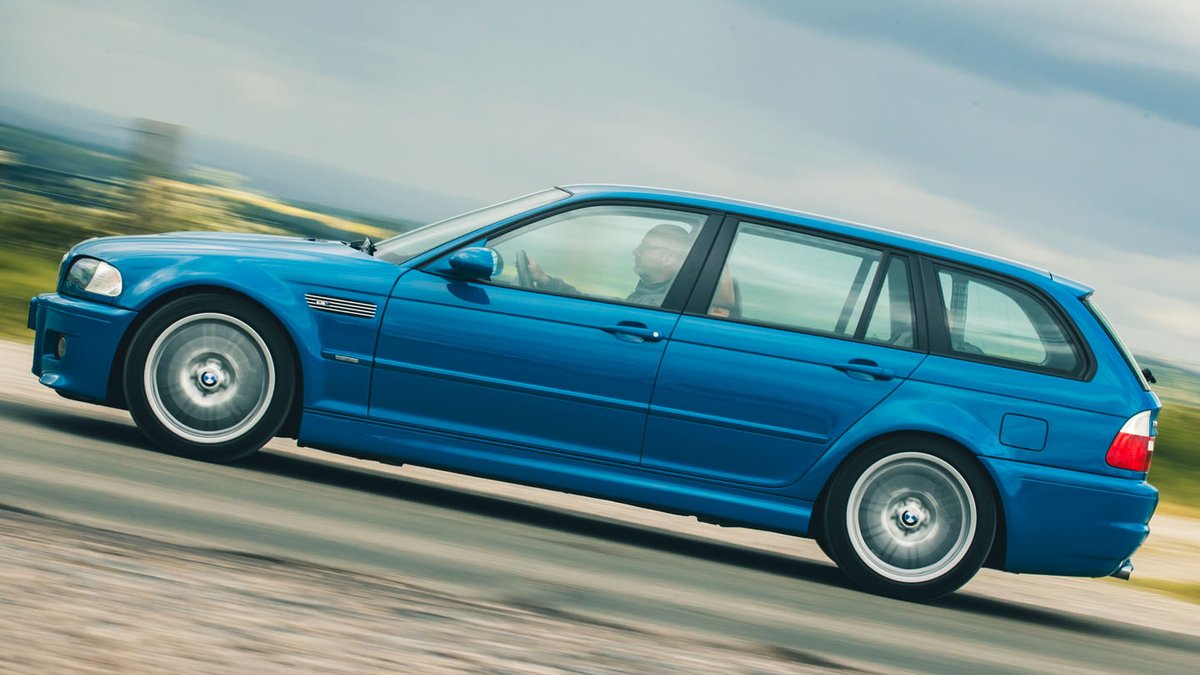
BMW never put an E46 M3 Touring into production, but that hasn’t stopped Petroyle Restorations from creating the next best thing. The Oxfordshire-based restorer takes standard E46 Touring shells and marries them with the mechanicals from an M3, effectively building the car BMW teased with a concept in 2000. It sounds like a straightforward swap, but the execution requires significant fabrication to get right.
Gregg Alvarez, the founder of Petroyle, starts with a solid Touring shell. The donor is a mechanically sound M3, often a rough Cabriolet, where the engine and chassis are in better shape than the body. The goal isn’t a restomod in the traditional sense; it is a period-correct creation of a vehicle that never existed. Essentially, it is as if BMW had built an M3 Touring and then had it restored to original condition.
Engineering the Conversion
Fitting the M3’s oily bits into the estate body isn’t a bolt-on affair. The spare wheel well interferes with the exhaust, so it is cut out and replaced with a carbon fiber panel. Standard wings, like those on a 318d, lack the clearance for the M3’s 18-inch wheels and wider track, necessitating a switch to carbon fiber items.
Related: Skoda Kodiaq vRS is quietly brilliant
Petroyle also fabricates custom front wings, bumpers, and side sills. The rear quarters are more complex. These remain steel, shaped and welded to match the BMW concept’s arches, while the rear doors stay standard to avoid expensive new tooling. During the build, the team addresses a common E46 issue where the rear axle carrier panel can crack, a fix that also helps to stiffen the shell.
This specific approach differs significantly from how manufacturers handle their own heritage these days. While major brands now offer “classic” divisions that certify original cars or build continuation models, those programs usually stick strictly to existing blueprints. Petroyle is doing something different by completing a design study the factory abandoned, bridging the gap between official history and enthusiast fantasy without the corporate red tape.
Behind the Wheel
The drivetrain is the E46 M3’s 3.2-liter straight-six, producing 338 horsepower. It revs naturally to nearly 8,000 rpm, a stark contrast to the turbocharged engines found in most new cars. The example driven had over 100,000 miles on the clock but felt tight, thanks to an overhaul during the transplant process.
Performance figures remain respectable for a car of this age. The sprint to 62 mph takes 5.2 seconds. While the 269 lb-ft of torque requires working the engine above 5,000 rpm, the experience is rewarding. Petroyle adds polybushing to the gear linkage to remove the rubberiness common in the original shifter, making the changes feel precise.
Related: Audi A2 Returns With New Aerodynamic Design
On the road, the car weighs 1,570kg and measures 1,780mm across the body. It feels composed and compliant. The steering is heavy and slower than modern electric systems, offering genuine feedback without the artificial weighting found in new performance cars. It is easy to place and balanced through corners, possessing a great balance that modern machinery often lacks.
A Practical Proposition
Practicality is a strong point for this creation. The boot offers 435 liters of space, and the rear seats accommodate adults comfortably. The lift-up rear window, a feature of the era, makes loading groceries or managing dogs easier. Inside, the driving position is excellent, with visibility that modern cars often lack due to thick pillars. Petroyle can retrim the interior or find a nice existing one depending on the customer’s preference.
Petroyle plans to build 50 units, with a starting price of £130,000. That is a significant sum for a car based on a 25-year-old platform, yet it undercuts many high-end restomods. For those seeking a usable, analogue daily driver with historical significance, it might be the ideal compromise between a classic and a modern performance car.