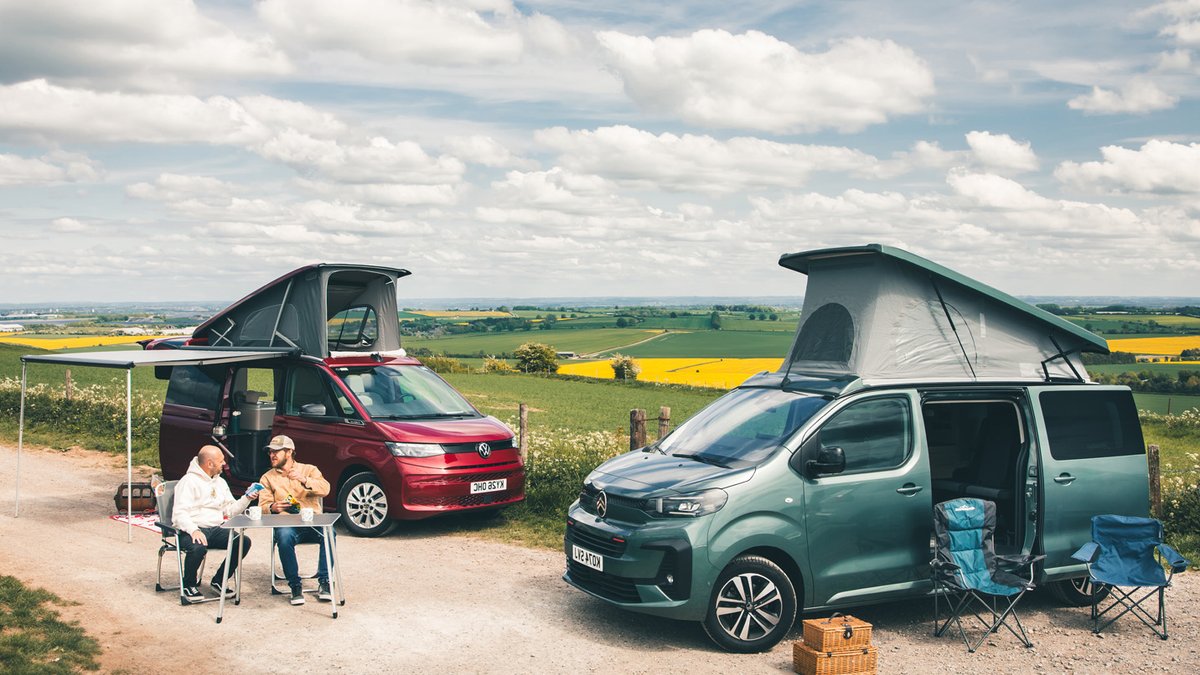
The Volkswagen California is a highly sought-after vehicle, with over 200,000 examples sold in the two decades since its debut in 2004. It has occupied a class of its own for more than 75 years, tracing its roots back to the iconic Type 2 camper van of 1950. The California has always been the factory-made camper for common folks, even if this T7-generation Cali now starts at almost £65,000 and accrues a further £10,000 with the trim and options that truly make it feel like a home from home.
The Citroën Holidays is a new competitor to the California, with a £56,000 entry point and some inevitably rougher edges. The Holidays starts life as a Citroën Spacetourer bus, built as normal in Hordain, north-east France, before being sent to Slovenia for its conversion. The payload is bolstered over stock and, unlike the VW, there’s one, simple spec to choose from.
The California mirrors much of the Holidays’ set-up, but its roof is electrically operated from this mid-range Coast upwards and incorporates a hatch to slide shut to separate the two floors. It trades one cooker hob and the Citroën’s unlikely commode toilet for larger water tanks, an integrated side awning and its own foldable chairs, which slot with beautiful tactility into the bootlid. Both vans have enormous tailgates that demand care when opening.
The VW’s build process takes place in Hanover across two different facilities, and it hits the configurator with three spec levels and powertrains, supplementing its core diesel with a 201bhp 2.0-litre petrol and 242bhp 1.5-litre eHybrid 4Motion. The latter offers around 50 miles of silent running—useful for keeping the peace at the campsite—and represents the only shot at four-wheel drive in this pairing.
Related: Silverado Tows 9,200 Pounds, but Wildwood FSX May Limit Payload
Despite its distinctly commercial vehicle beginnings, the Holidays won’t subject you to a sour driving experience.
The Cali is quieter on a cruise and nimbler in corners, and it exhibits more quality damping on rougher roads to help justify its larger asking price with more polished manners.
The VW is unequivocally techier, then. It’s more immediately habitable too, however much the climate control sliders of its protruding infotainment screen frustrate beside the Citroën’s humbler row of buttons and toggles. Front quarterlights aid the Cali’s forward visibility, and you can see more through its rear screen, which helps offset its pert side mirrors.
The Citroën’s rough edges show themselves most viscerally inside, with its tacked-on smoke detector, visible bolts and cabling and—perhaps a clincher for some buyers—the modest level of physical fitness and ingenuity required for its transformation from four-seat shuttle to two-tier hotel room.
Each of the levers and pulleys needed to activate bedtime in the California exudes the decades of experience VW has in the game, although whether operating its heating via a touchscreen (or bespoke phone app) is preferable to the simpler knobs and dials of the Holidays falls into the personal taste of the buyer.
Related: Toyota RAV4 Test Drive Falls Short
A more objective demerit for the VW is its more frequent fuel stops. We averaged 37mpg in both vans across similar usage, but the Holidays’ larger tank yields more than 500 miles between fills; the Cali is likely to illuminate its fuel light 100 miles earlier.
The Volkswagen is otherwise the better car here against any parameter bar list price. Even then, its ability to retain value ensures you can lease one from a mite over £300 per month, while the Citroën asks considerably more. And yet each of these devices transcends the usual formalities of four-wheeled transport to stand a very good chance of becoming a beloved member of the family.
They feel far more economy class in their ambience, but the upshot is you’ll harbour less fear of getting them dirty or scuffed. The Citroën Holidays is more honest, right down to its brazen name. It’s much less precious about the life that’s going to be thrown at it—which in turn might encourage a more enthusiastic attitude from its owners in what they do with it.
As the newcomer to the scene it ought to sit proudly on camp amid a row of Vee-Dubs, too.