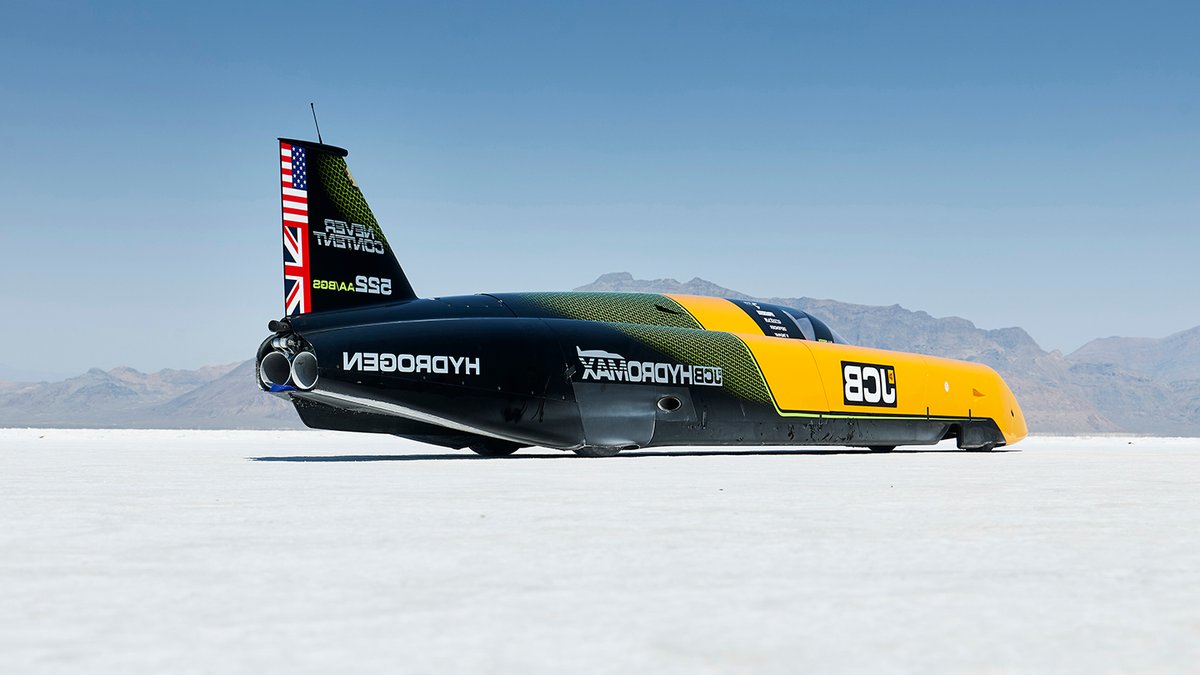
The Bonneville Salt Flats in Utah are a place of extremes—flat, featureless, yet alive with the hum of engines pushing limits. In September 2024, the JCB Hydromax team set a new land speed record for a hydrogen-powered vehicle there, reaching 406.320 mph. The car, powered by two converted digger engines, made a clear statement about alternative fuels.
The current official FIA land speed record for a battery-electric vehicle stands at 341.264 mph, set in 2016 by the Venturi Buckeye Bullet 3. That vehicle, a collaboration between Monaco-based Venturi and Ohio State University, generated nearly 3,000 horsepower from four motors and eight lithium iron battery packs. Its total weight reached 3.6 tons, with the batteries alone accounting for 1.6 tons.
This record has remained unchallenged for nearly a decade. Battery energy density has improved since then, motors have become more efficient, and charging speeds have increased. The Yangwang U9 Xtreme, a Chinese hypercar, has already hit 309 mph—just 32 mph shy of the record.
Related: Jaguar Type 00 interior revealed
Land speed record rules require a vehicle to complete two runs on a measured course within 60 minutes. The average speed of both runs determines the official record. For an electric vehicle, this means either rapid recharging or battery swapping in under an hour, which presents logistical challenges but is not impossible.
Several practical obstacles exist. Batteries add significant weight, and land speed record cars must be as light as possible to maximize speed. The Buckeye Bullet 3’s battery weight influenced its design. Aerodynamics can help offset some of that mass, but balance remains difficult.
Recharging also poses problems. Bonneville lacks charging infrastructure, though a truck stop in nearby Wendover, Utah, offers 350 kW chargers. A manufacturer could bring a portable battery pack to recharge the car between runs, but this adds complexity. Companies like BYD, with its ultra-fast Flash charging, or Nio, with battery-swapping technology, could turn this challenge into a showcase for their advancements.
Motivation may be the larger issue. Land speed records often serve as publicity stunts. JCB’s Hydromax team acknowledged this—their hydrogen-powered car won’t directly improve the company’s diggers or future engines. Yet it generated headlines, highlighting hydrogen combustion.
Related: Silverado Tows 9,200 Pounds, but Wildwood FSX May Limit Payload
For electric vehicle manufacturers, the situation differs. Many already push performance boundaries on public roads. Tesla’s Model S Plaid, Lucid’s Air Sapphire, and Rimac’s Nevera demonstrate rapid acceleration and high speeds. None have attempted the land speed record, likely because building a 400 mph car may not align with their goals.
The opportunity remains. An electric land speed record car could test high-performance battery and motor technology. The record itself is an easy win for any manufacturer willing to invest.
The salt flats endure. The record waits. Someone simply needs to claim it.