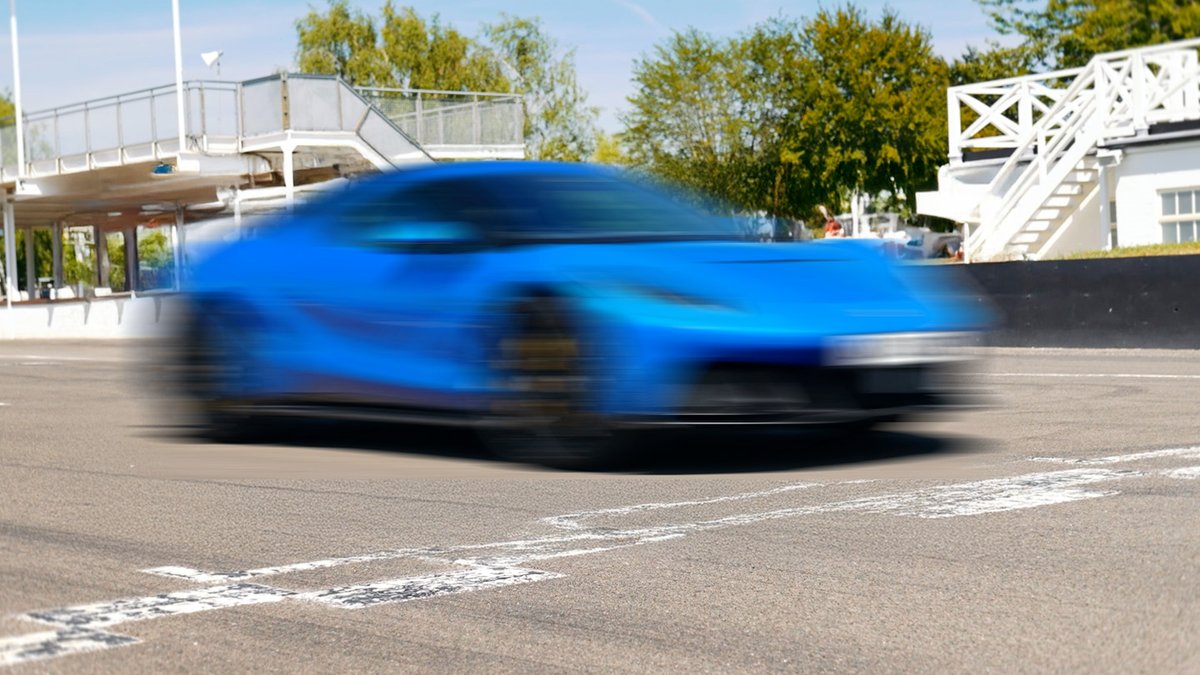
At 4:30 a.m. a driver set out for a 150‑mile trip to the Goodwood Festival of Speed, only to arrive a day early at the neighboring circuit for a test drive of a new all‑electric, tri‑motor sports car boasting roughly 1600 bhp.
Press event and crowded pit lane
The venue, increasingly popular for debuting high‑performance models, was packed with six cars in the pit lane and a dozen recognizable road testers. A swarm of vloggers and influencers held smartphones aloft, eager for a glimpse of the machine. Former Formula 1 champion Jenson Button arrived, only to be swarmed by Instagram crews demanding selfies, inadvertently distracting the media crowd.
Organisers described the invitation as an “exclusive opportunity” for “experienced testers,” yet the presence of many non‑professional drivers suggested the definition had been stretched. After a brief legal disclaimer absolving the circuit and manufacturer of liability, participants were ushered into a half‑hour press conference.
Related: MG electric car drops to £10k buying guide
The briefing followed a familiar pattern: a cursory product overview, a vague design spiel about “flowing lines” and “sculptural artistry,” and a limited technical rundown. Slides were promised by email, though their arrival remained uncertain. Attendees refrained from asking questions publicly, preserving the answers for the small room.
Five‑minute test run
When the limited track time finally arrived, colleagues took their turns, each emerging with little more than a vague sense of the car’s capabilities. The writer’s own lap began with a gentle installation circuit, followed by a quicker flying lap. Within minutes, the session ended before the driver could fully adapt to the “funny, grabby brake pedal” or explore drive modes, stability control, and launch control settings.
An instructor seated beside the driver enforced strict rules: no exceeding a preset speed, no slowing down or stopping on track, and no deviation from the prescribed program. Even without the instructor’s vocal guidance, the vehicle’s automated systems would still have constrained the evaluation.
Related: Camaro Sales May Not Be Engine Dependent
After the three‑lap, five‑minute stint, the driver was redirected to a demonstration of an automated parking system and a short road‑loop in a different vehicle—one not originally slated for testing.
By mid‑afternoon the writer was back at the office, racing against a deadline to compile impressions of both the car that was not driven as intended and the one that was.
The experience highlights a growing tension between manufacturers seeking broad media exposure and the practical need for thorough, driver‑focused testing. When a high‑power electric car is allocated only a handful of minutes, the resulting feedback may be too superficial to inform future development, especially for a vehicle that promises unprecedented performance.