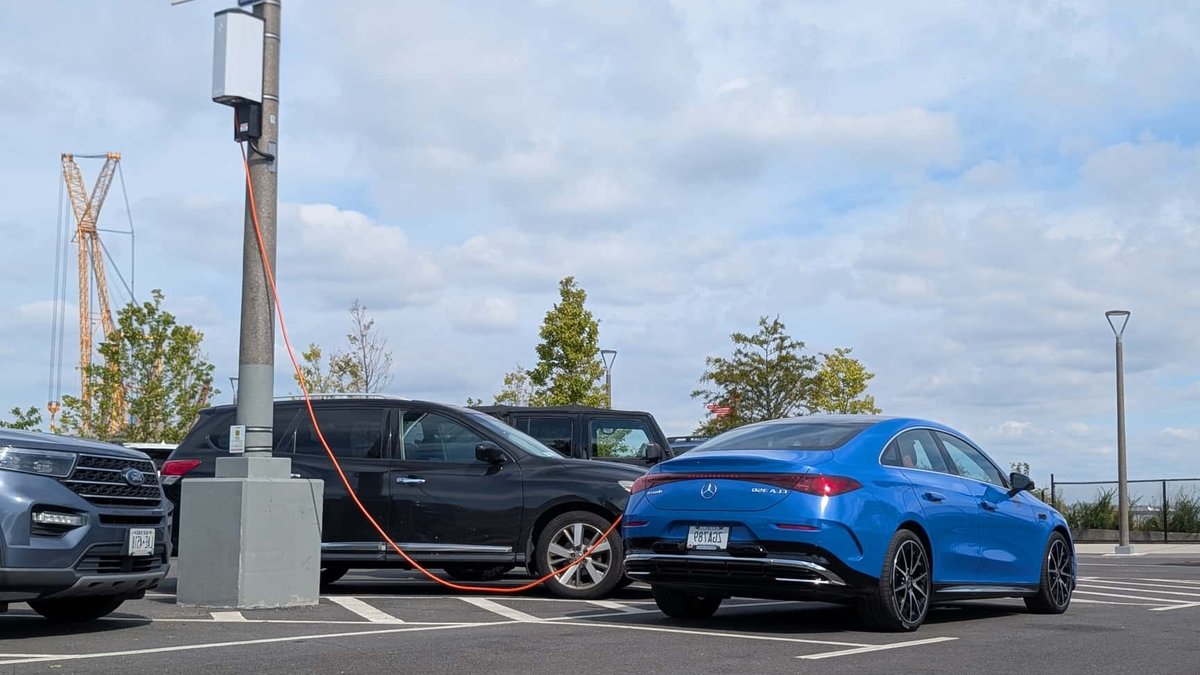
New York City’s electric vehicle charging infrastructure faces a unique challenge: dense urban streets, limited garage access for apartments, and the need for widespread public charging points. With over 81,000 plug-in and hybrid vehicles registered in the city, the demand for accessible charging has grown sharply. While fast chargers are expanding, their high cost and installation complexity slow their deployment. A new startup, Voltpost, is addressing this gap by converting existing streetlight poles into Level 2 charging stations, beginning with a pilot unit at Brooklyn’s Bush Terminal Park.
Challenges and Comparisons
While the cable retraction mechanism is UL-certified for extreme temperatures, real-world durability under frequent use remains untested at scale. City drivers, known for rough handling of charging equipment, will ultimately determine reliability. Voltpost monitors units remotely, dispatching local technicians for repairs when needed. Other startups like It’s Electric and Gravity Charging Center are pursuing similar solutions, using building power or modular designs to avoid sidewalk clutter. It’s Electric’s model requires drivers to bring their own cables, while Gravity’s Times Square station claims to draw excess power from a single block to support a 500-kilowatt station.
New York’s current curbside network remains modest. The city’s 88 Flo chargers, with towering structures and long cables, contrast with London’s 27,000 curbside units, many also on lampposts.
The Case for Level 2 Charging in Urban Settings
Level 2 chargers are increasingly seen as the backbone for everyday electric vehicle use in dense cities. Unlike fast-charging stations, they provide a steady charge over several hours, which aligns with how most drivers interact with their vehicles. For apartment dwellers without home access, these chargers offer a practical solution during work hours or errands. The source highlights that cars typically remain stationary for extended periods, making Level 2 charging more efficient and less stressful on batteries compared to rapid charging cycles. This approach also reduces the need for expensive, high-powered infrastructure in spaces where quick turnover is not essential.
The practicality of Level 2 systems extends to their cost-effectiveness and ease of deployment. Startups like Voltpost leverage existing streetlight poles and grid capacity from converted LED infrastructure to bypass costly trenching and utility upgrades. This method allows installations in hours rather than weeks, minimizing disruption to city streets. The source notes that such solutions rely on spare electrical capacity, a key advantage as many cities transition to energy-efficient LED street lighting. By tapping into these resources, companies can expand charging access without the financial and logistical hurdles of traditional grid extensions.
Competing Solutions and Future Outlook
Other companies are exploring complementary approaches to address urban charging gaps. This design eliminates tangled cords on sidewalks and simplifies maintenance. Similarly, Gravity Charging Center has developed a high-capacity station in Times Square that allegedly harnesses excess power from a single city block. These innovations reflect a broader trend of startups working with existing infrastructure rather than waiting for large-scale municipal upgrades.