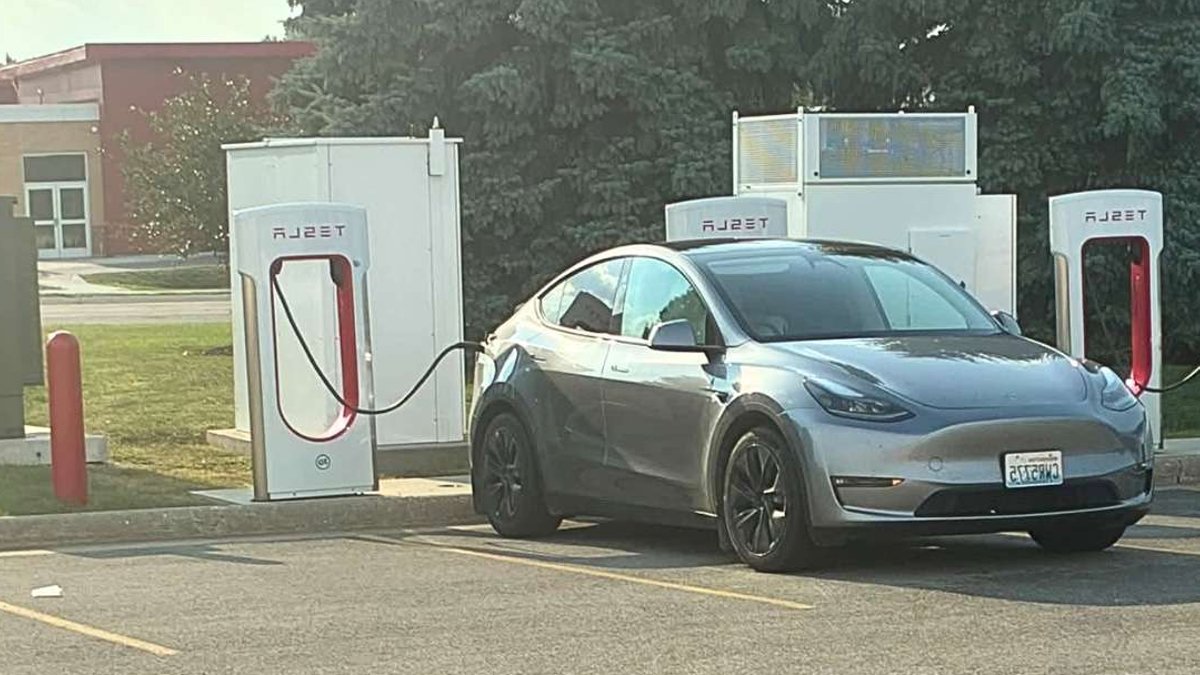
Scott and his daughter spent a month driving nearly 5,000 miles across the U.S. in a Tesla Model Y, using only standard 110-volt wall outlets for overnight charging. Their journey tested assumptions about electric vehicle road trips—no fast chargers, no high-voltage setups, just a regular plug and patience.
The 110-volt experiment that worked
Scott’s method was straightforward: plug in wherever they stayed, let the car charge overnight, and drive the next day. He slept in the Model Y several times, using a mattress and window shades from Amazon to improve comfort. The approach eliminated the need for frequent Supercharger stops but required planning around the car’s slower charging rate.
Related: Camaro Sales May Not Be Engine Dependent
Level 1 charging, which Tesla describes as plugging into a standard household outlet, adds about 3 to 5 miles of range per hour. That rate isn’t enough to recover from a full day’s driving in one night, but Scott didn’t need it to. He wasn’t topping up between legs of the trip; he was letting the car recharge while they slept. The outlet wasn’t a backup—it was the primary solution.
Some argue this method is impractical for most road trips. A full charge from empty can take more than a day. But Scott’s journey wasn’t about speed. It focused on using downtime efficiently, turning every overnight stop into a slow but steady refill. The car never needed a full charge—just enough to reach the next destination.
Native navigation saved time, not just battery
Scott’s biggest surprise wasn’t the charging. It was Tesla’s built-in navigation system. He tested third-party apps like Google Maps and A Better Route Planner but found Tesla’s software more reliable for long-distance travel. The car’s navigation adjusts charging stops in real time, accounting for elevation, weather, and battery state in ways external apps can’t match.
Related: Global PHEV sales keep declining worldwide
On his longest driving days—600 to 700 miles—the system cut about 45 minutes off total travel time by optimizing routes and charging stops. His longest stop lasted 24 minutes, far shorter than some EV road trips require. The car’s ability to recalculate on the fly meant fewer surprises, less range anxiety, and a smoother experience.
This isn’t the first time Tesla’s navigation has outperformed expectations. Other owners have shared similar results, though the system isn’t perfect. Some drivers have faced issues with inaccurate range estimates or unexpected charging delays. Scott’s trip showed that when it works, it works well—but reliability remains a concern.
The accessories that made it work
Scott’s accessory list was practical. A drop-down tray under the screen, a retractable charging dock for the center console, and a rear-seat trash can kept the cabin organized. An Amazon mattress and window shades turned the Model Y into a makeshift bedroom. WeatherTech floor liners and white door pocket liners improved comfort without breaking the bank.
Related: Used car values hold steady in April
None of the upgrades were expensive or new. Together, they made a long trip manageable. Other owners have found that small improvements often matter more than high-tech solutions.
Scott’s journey didn’t depend on perfect infrastructure or cutting-edge tech. It relied on a car that could communicate its limits, a driver willing to trust those limits, and patience with the slowest charging option. The software handled the calculations. The rest was just showing up.